
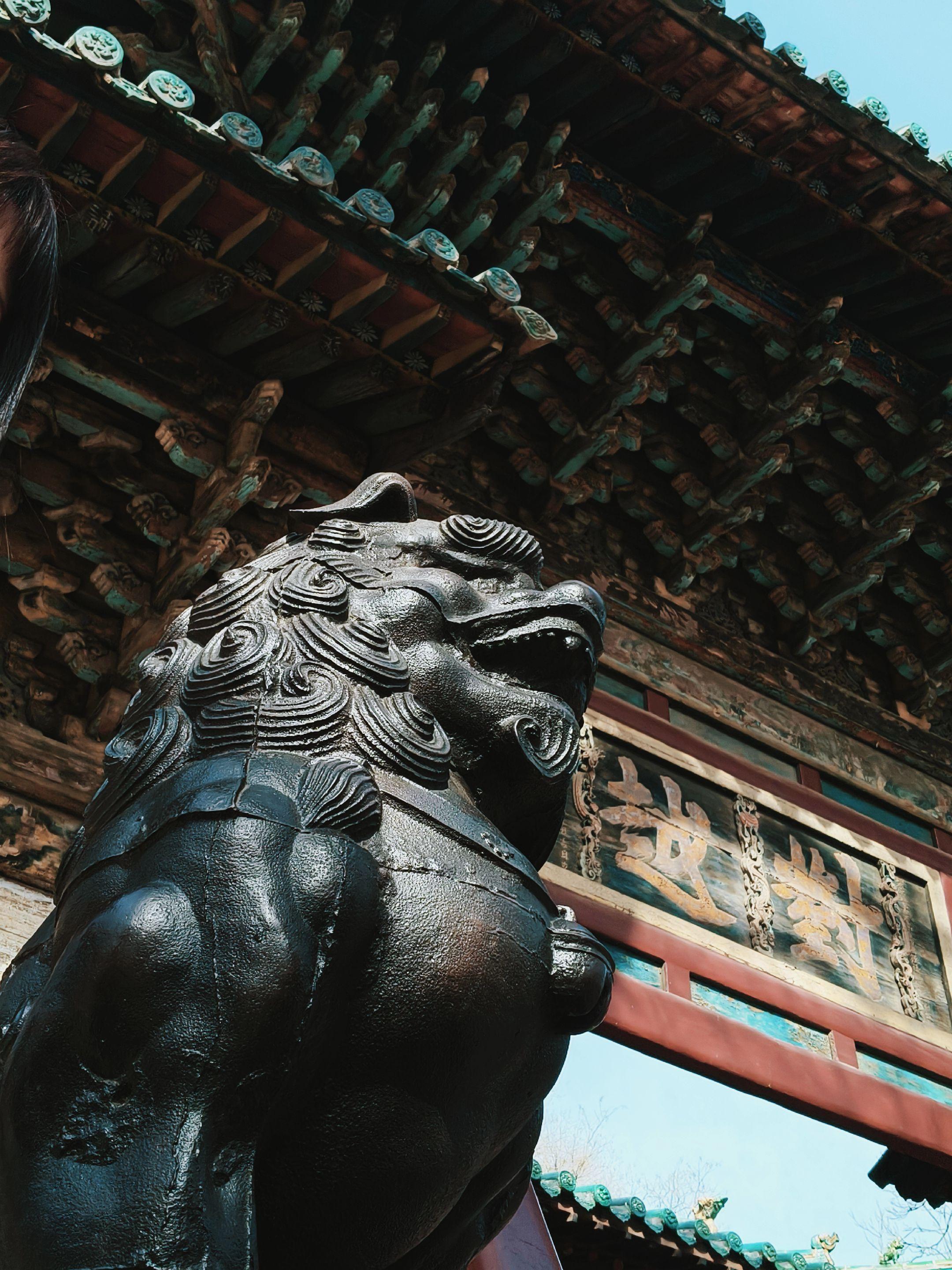
The Architecture That Remained
In Shanxi, architectural history still stands above ground.
Timber halls, cave temples, pagodas, monasteries and merchant courtyards remain across Shanxi in exceptional concentration. This six-day route follows them south from Datong through Mount Wutai and Pingyao to Taiyuan. With specialist interpretation, brackets, rooflines, murals and repairs become evidence of how buildings carried weight, framed ritual and survived successive centuries on their original ground.
Duration: 6 days
Recommended Season: April to June; September to November
Group Size: 4-8
Region: China - Northern and central Shanxi
The Route
Shanxi holds more surviving historic architecture than any other Chinese province, including most of the country’s remaining pre-Yuan timber buildings and all three generally recognised surviving Tang timber halls. The route follows this concentration from Yungang and Datong’s monasteries to Yingxian, Mount Wutai, Pingyao and Taiyuan—the same wider field studied by Liang Sicheng and Lin Huiyin during their surveys of the 1930s.
Why This Route
An archive still standing
Architecture from the Northern Wei through the Tang, Liao, Jin and later periods remains across one province. Seeing it in sequence reveals change through buildings rather than a museum timeline.
Learning to read a building
Specialist interpretation moves beyond names and dates to bracket sets, bay systems, rooflines, murals and repair. Smaller halls matter as much as recognised monuments when their structure holds the evidence.
Depth without constant movement
Two nights in Datong and stays connected to mountain, old city and courtyard settings reduce daily disruption. The route favours sustained looking over collecting sites at speed.
The Narrative
Chapter 01 · The Northern Capital
Datong · Yungang
Yungang, monastic compounds and the geometry of Datong place cave carving, timber architecture and the northern capital within one field of view.
Chapter 02 · Timber and Mountain
Yingxian · Hunyuan · Mount Wutai
From timber pagoda and cliff monastery, the route enters Mount Wutai, where a single smaller hall can hold an entire period of architectural history.
Chapter 03 · Courtyards and Commerce
Xinzhou · Pingyao · Taiyuan
Religious patronage gives way to merchant courtyards, fortified urbanism and the regional institutions of Pingyao and Taiyuan.
Itinerary
Day 01 · Datong
Arrival among the walls
Arrive in Datong and transfer privately to the hotel. The remainder of the day is left light for rest after the journey and an introduction to the route’s architectural vocabulary. Accommodation is selected within or close to the historic city where operations allow. Overnight in Datong.
Day 02 · Datong
Cave, monastery and city
Visit Huayan Temple and Shanhua Temple with specialist interpretation of their halls, roofs and later repairs. Continue to the Yungang Grottoes, approached as excavated architecture as well as sculpture. End beside Datong’s city wall, considering the reconstructed city and surviving fabric together. Overnight in Datong.
Day 03 · Datong to Mount Wutai
Engineering in timber and stone
Travel south to the Yingxian Wooden Pagoda and Jingtusi, where timber structure and the celestial ceiling provide two different scales of construction. Continue to the Hanging Temple near Hunyuan before entering the wider religious landscape of Mount Wutai. The sequence remains subject to opening hours. Overnight at Mount Wutai.
Day 04 · Mount Wutai to Xinzhou
The older halls
Visit Yanshan Temple, Foguang Temple and Nanchan Temple, subject to opening, conservation controls and access. The day is organised through close looking at structure, roof, mural, sculpture and repair rather than a rapid sequence of stops. Continue to Xinzhou after the final confirmed visit. Overnight in Xinzhou.
Day 05 · Xinzhou to Pingyao
From monastery to merchant courtyard
Travel to Shuanglin Temple before continuing to the Wang Family Compound, where the route shifts from religious patronage to household hierarchy and merchant wealth. Enter Pingyao Ancient City later in the day. Attend Encore Pingyao if the production schedule and the day’s pace allow. Overnight in Pingyao.
Day 06 · Pingyao to Taiyuan
The provincial frame
Leave Pingyao for Taiyuan and visit Jinci, where buildings, water and ritual space bring several architectural periods together. Continue to the Shanxi Museum to place the six-day route within a wider provincial history. Transfer to Taiyuan airport or railway station according to the confirmed onward departure time.
Accommodation, Transport and Meals
Accommodation
Accommodation is selected according to the route, the needs of the group and availability. This may include well-located city hotels, design-led properties, heritage stays or landscape lodges. Standards, room categories and any upgrades are agreed during the planning process.
Transport
Private road transport throughout, with arrival in Datong and departure from Taiyuan. Vehicle class and luggage arrangements are TBC.
Meals
Meal arrangement is TBC. The route should retain space for Shanxi noodles, vinegar traditions and local dishes without turning each day into a food inventory.
Begin with this route
Share who will be travelling, when the journey may take place, and anything that should be understood before it begins.
